Clay Soil and Foundation Movement: Why DFW Slabs Leak
Ask a room of DFW plumbers why slabs leak here and one word answers first: clay. Blackland Prairie soil swells, shrinks and walks foundations a little every year — and the pipes buried under those foundations flex with it until one gives. This guide explains the mechanism, the seasons, and what it means for your home’s plumbing.
The Blackland Prairie problem
The soil under Little Elm, Frisco, Denton and their neighbors is expansive clay: it drinks water and swells in wet months, then contracts hard in a Texas summer, sometimes pulling away from the foundation’s edges. A slab is rigid; the ground under it is not. Every home here rides that slow seasonal motion.
The plumbing buried in and under the slab rides it too — rigid copper runs, joints and fittings taking thousands of small flex cycles. Joints that were tight in 2004 have been gently worked for twenty years.
Why leaks cluster by season and street
Movement peaks at the transitions: the first deep rains after drought, the long dry shrink of August. Slab leak calls in DFW follow that rhythm — and they cluster geographically, because subdivisions share soil profiles, builders and pipe vintages.
When two homes on one street leak in a season, it is rarely sabotage or coincidence. It is a shared birthday arriving. Your street’s history is real data about your own lines.
Pressure, chemistry and age join in
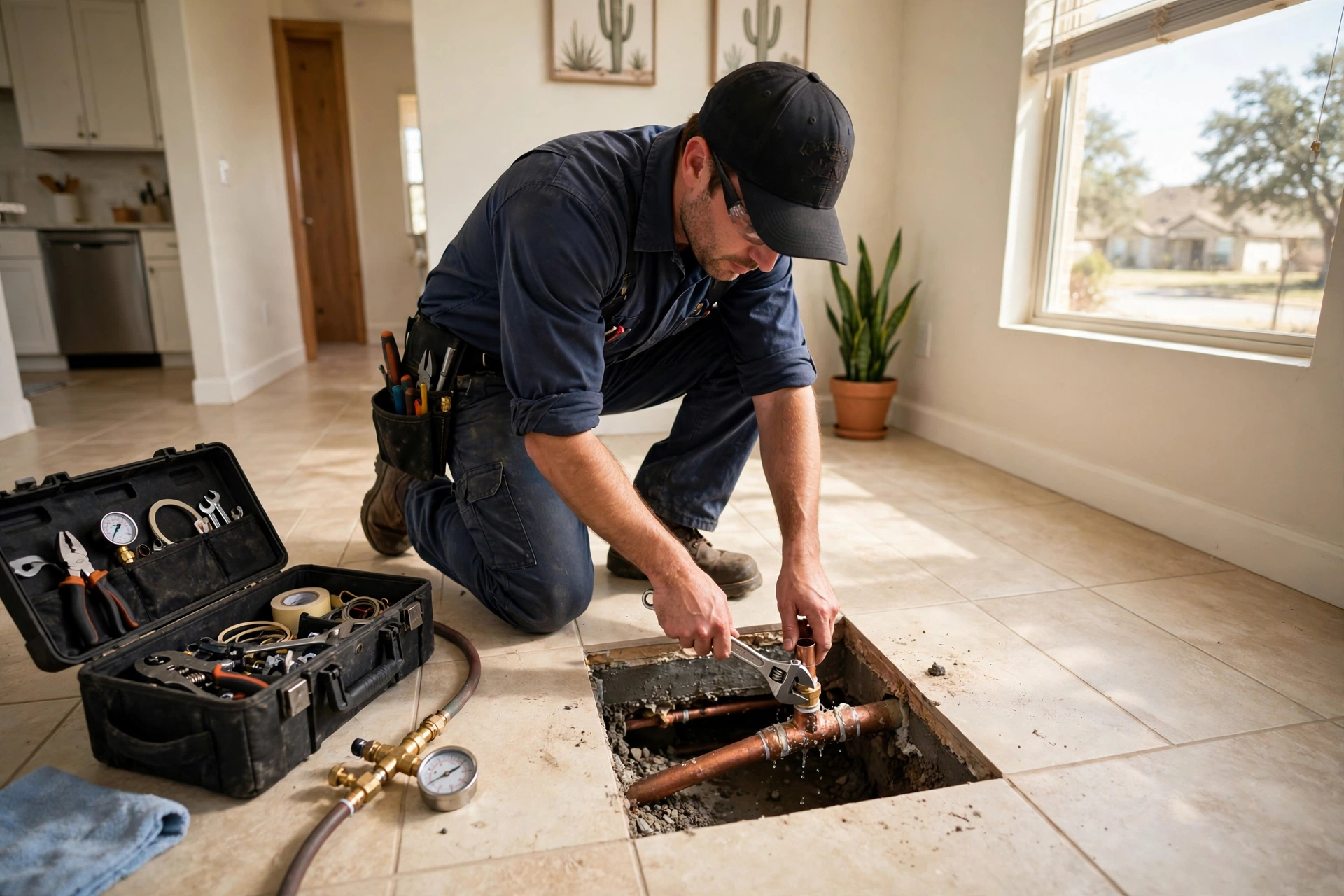
Clay does the bending; other forces help. Municipal water pressure at the high end of normal strains every joint. Soil and water chemistry slowly thin copper from outside and in. And time is undefeated: the corridor’s 2000s copper is now at the age where the first generation of failures appears, with 80s and 90s stock a decade deeper into it.
None of these is a defect you could have caught with better homeownership. They are the local physics of buried pipe.
What homeowners can actually control
You cannot change your soil, but you can change its moisture swings: consistent foundation watering in drought, drainage that keeps water from ponding against the slab, and gutters that discharge away from the foundation all narrow the swell-shrink cycle your plumbing rides.
Inside, a pressure regulator kept in range, and prompt attention to the early signs, are the controllable half of the problem. The uncontrollable half is why pinpoint-first assessment exists.
The long view for this housing stock
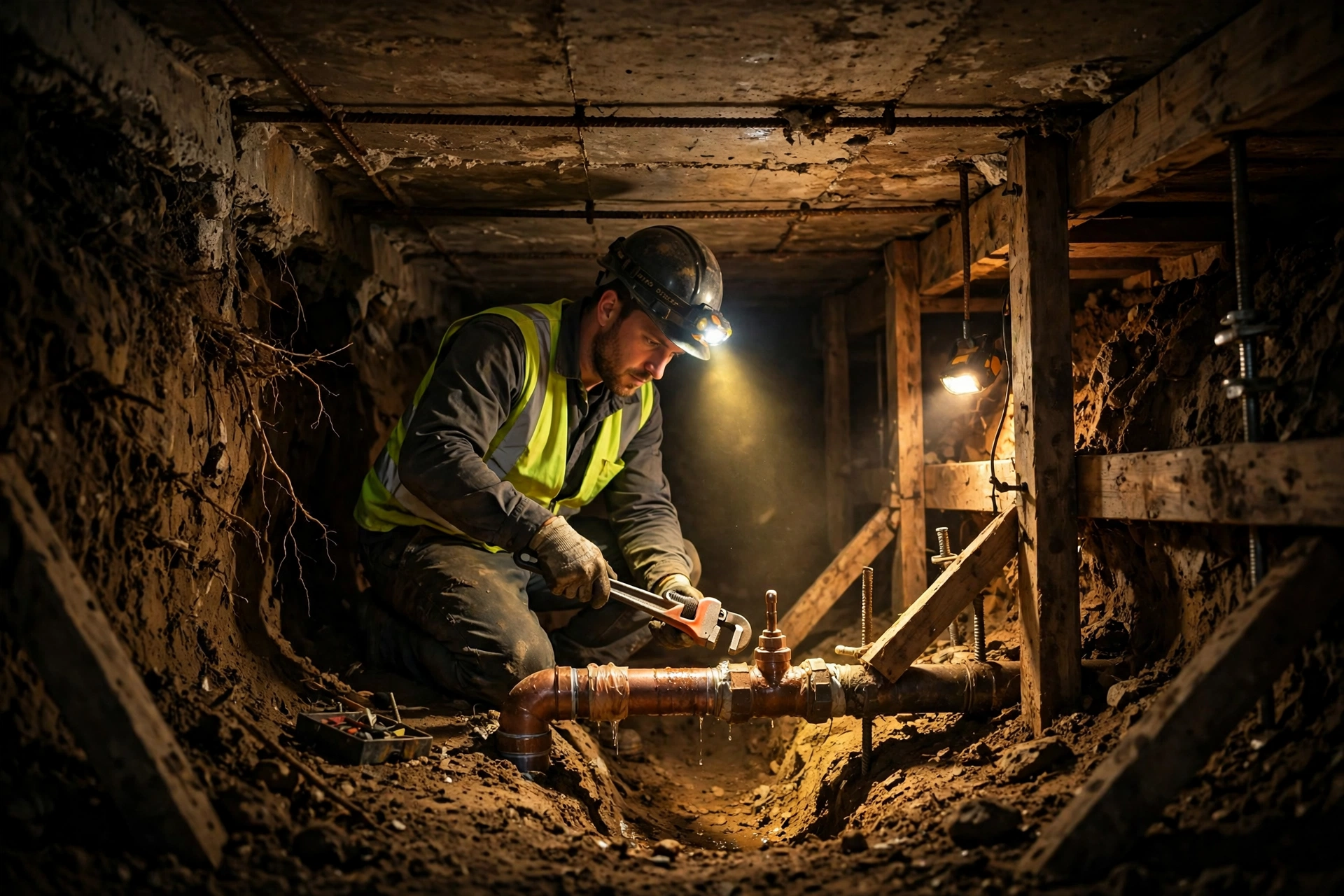
North Texas will keep building on clay, and its slabs will keep leaking on schedule — which is less a doom than a maintenance era arriving for the corridor’s housing. Homes that manage moisture, watch bills, and repair with method discipline age gracefully here.
The ones that suffer are the ones whose first small leak runs for a year, eroding the soil the whole foundation depends on. In clay country, the leak is never just about water.
No — most homes ride the clay for decades without a failure. Movement raises the odds and explains the pattern; it does not schedule your leak.
Stabilizing a foundation addresses structural movement, not pipe age or joint wear. If pipes have already flexed for decades, plumbing assessment stays its own conversation.
Consistent soil moisture narrows the shrink-swell amplitude around your slab — a widely recommended DFW practice. It reduces stress on everything buried, pipes included.
Related Services & Guides
Have This Problem at Your Home?
Guides explain the problem — an assessment shows whether it is yours. One call connects you with an independent local slab leak professional in the Little Elm area.
Call (888) 555-0199 →Get in Touch with Us
The fastest way to reach a local slab leak professional is by phone. Prefer to write it down first? Send the short form — describe what you are seeing (a sudden bill spike, warm floor spots, the sound of running water), where in the home, and since when.