Spot Repair vs. Reroute vs. Tunneling: Which Slab Leak Fix Is Right?
Three legitimate ways to fix the same under-slab leak — and the wrong choice costs either a floor, a fortune, or a second repair next year. This guide compares spot repair, rerouting and tunneling on what actually decides between them: the pipe’s condition, the leak’s location, and what sits on top of it.
The three methods, plainly
Spot repair: the slab is opened at the pinpointed leak, the failed section is cut out and replaced, and the opening is patched. Reroute: the buried line is abandoned and a new PEX line is run through walls and attic — the slab is never opened. Tunneling: a crew digs under the slab from outside to reach the pipe, repairs it at full access, and backfills — interior floors untouched.
All three end with the same proof: a pressure test. They differ in access, disruption and — most importantly — in what they assume about the rest of your pipe.
When spot repair wins
One leak, in pipe that is otherwise sound: a failed fitting in healthy copper, a single corrosion point with full-thickness pipe on both sides, a first leak in a mid-life home. Spot repair is the smallest job that honestly solves that problem, and a professional who recommends more for it is selling, not diagnosing.
Its constraint is the floor: the opening lands where the leak is, and the patch will live in whatever floor that is. Under carpet or a closet, trivial. Under a kitchen island, a different conversation.
When reroute wins
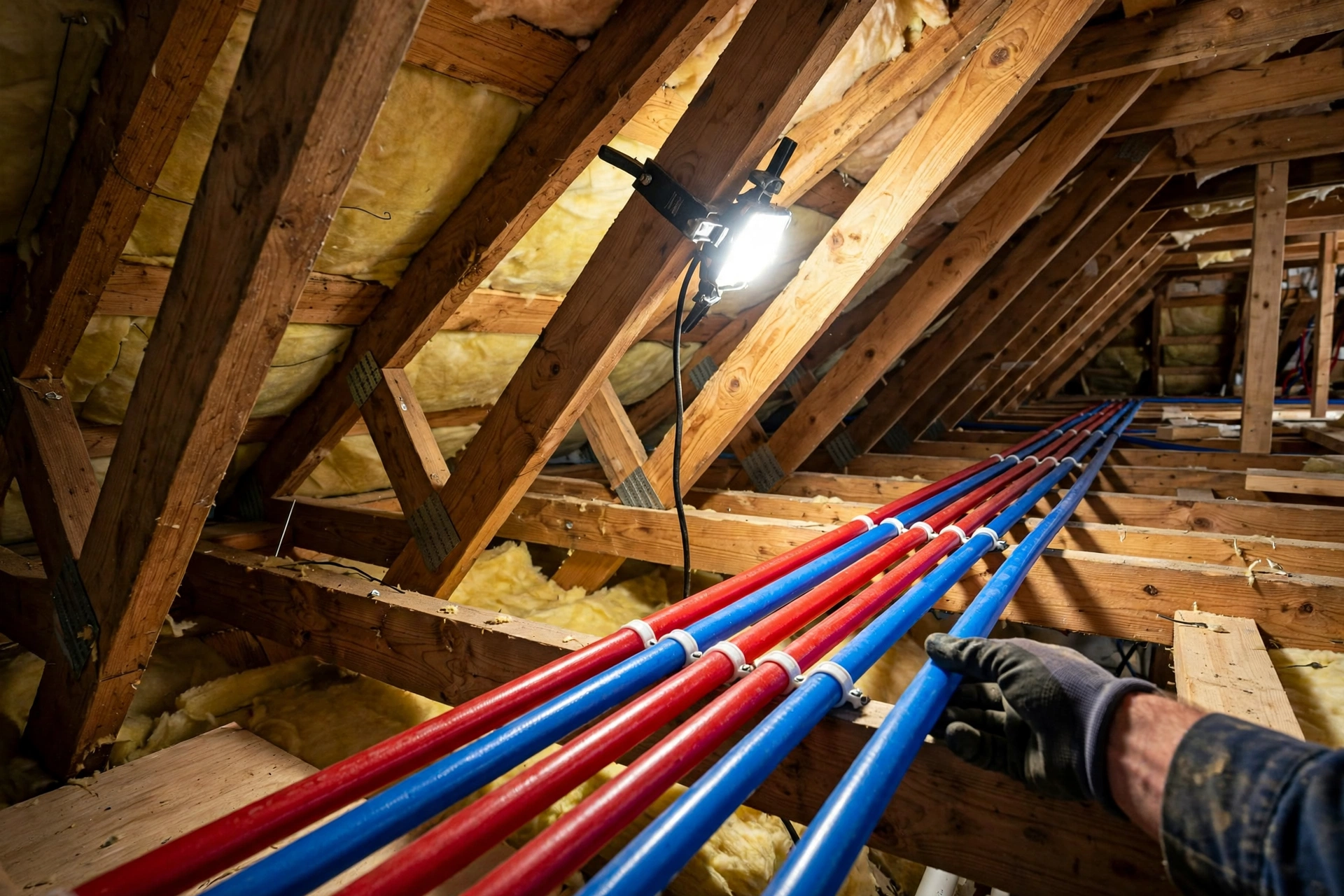
When the line is the problem — a second or third leak on the same run, copper thinning along its length, a history that says the material is done. Rerouting ends the pattern instead of renting time from it, and it never touches the floor.
Reroutes also win when the leak sits under floors that cannot be replaced in kind — discontinued tile, matched hardwood, stone — and when the home’s layout offers a clean overhead path. The trade is wall openings where the new line runs, and a bigger single job than one spot repair.
When tunneling wins
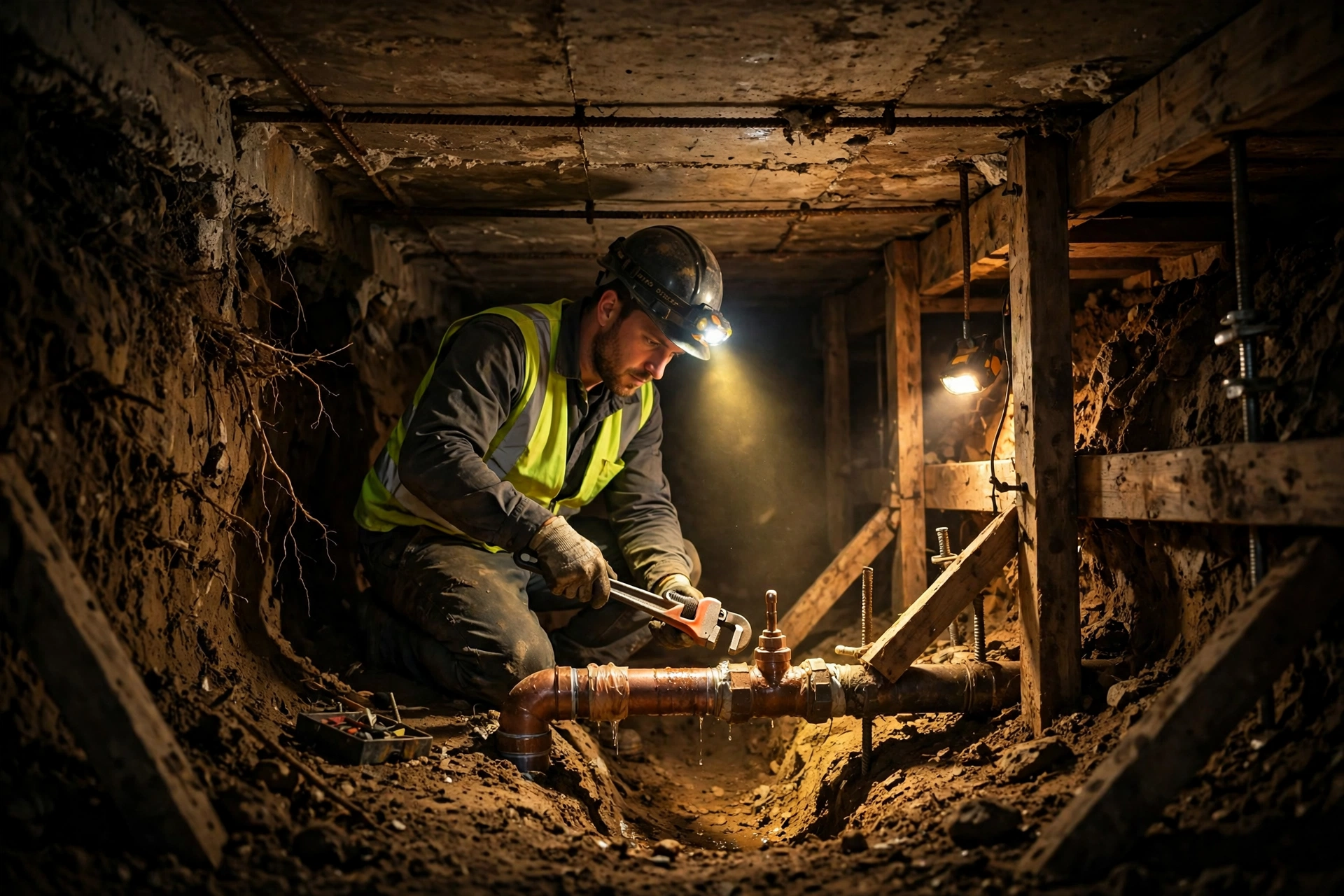
When the pipe deserves direct repair but the floor above it must not be opened: leaks under showers, islands, custom floors, or mid-house locations in otherwise sound pipe. Tunneling buys full access to the failed section — including replacing a longer stretch than a floor opening allows — from the only direction that costs no interior finish.
Its constraints are physical: distance from an exterior wall, soil conditions, and room to work. Some locations cannot be tunneled, and a professional should say so at the assessment, not after the digging starts.
The decision, in one checklist
Ask four questions. Is this the line’s first failure, or its habit? What floor sits over the leak, and what would its repair cost in money and match? How far is the leak from an outside wall? And what does the pipe around the failure look like — shown to you, not described?
The answers pick the method almost by themselves. Any professional worth hiring will walk exactly this list with you — and put the chosen scope, and the rejected options’ reasons, in writing.
A single spot repair is usually the smallest job — until the line leaks again. The honest comparison is total cost to end the problem, which is why pipe condition, not the first invoice, should drive the choice.
Yes — a reroute for one failing run and a tunneled repair for another is a legitimate plan. Mixed scopes usually mean the assessment was done pipe by pipe, which is a good sign.
Policies vary — access costs and resulting damage are treated differently from the pipe repair itself in many Texas policies. The documentation matters more than the method; keep all of it.
Related Services & Guides
Have This Problem at Your Home?
Guides explain the problem — an assessment shows whether it is yours. One call connects you with an independent local slab leak professional in the Little Elm area.
Call (888) 555-0199 →Get in Touch with Us
The fastest way to reach a local slab leak professional is by phone. Prefer to write it down first? Send the short form — describe what you are seeing (a sudden bill spike, warm floor spots, the sound of running water), where in the home, and since when.