Signs of a Slab Leak: 9 Warning Signs DFW Homeowners Miss
A slab leak rarely announces itself with water on the floor. In North Texas homes it whispers first — through the water bill, the floor, the walls. These are the nine signs professionals take seriously, in the order homeowners usually notice them, and what each one is actually telling you.
1–3: The bill, the meter, the sound
The water bill is the classic first witness: usage jumps 30, 50, 100 percent with no new appliance, no guests, no pool fill. Pressurized lines leak around the clock, and the bill counts every gallon. Second, the meter test: with every tap and appliance off, a meter that keeps moving is describing a leak somewhere in the system. Third, the sound — a faint hiss or running-water murmur inside a wall or under a floor when the house is quiet and nothing is running.
Any one of these alone earns attention. Two together, in a slab-on-grade home on clay, is a pattern professionals treat as a slab leak until proven otherwise.
4–6: What the floor tells you
Warm spots are the hot-water line’s signature: a stripe or patch of floor noticeably warmer than its surroundings, found by bare feet at night. Cold lines speak differently — damp patches, laminate or engineered wood that cups and buckles, grout that darkens and stays dark, carpet that feels cool and smells musty in one room.
Flooring damage is the leak’s second act: by the time wood buckles, water has usually been spreading under it for weeks. The floor is evidence, but it is also a clock.

7–9: The house itself starts answering
Hairline cracks that appear in tile, drywall or the slab-edge foundation line; doors that begin rubbing their frames after years of swinging free; a sudden drop in water pressure at every fixture. Each can have other causes — in DFW, clay movement alone cracks things — but arriving together with any earlier sign, they complete a picture.
The ninth sign is the quietest: a musty, mildew smell in one room that cleaning never quite wins. Under-slab moisture feeds mold at floor level, and the smell is its press release.
Signs that point elsewhere
Not every water symptom is a slab leak. A stain directly under a bathroom points to that room’s plumbing. A leak that only happens when a specific fixture runs lives in that fixture’s line or drain. Bills that spike only in summer irrigation months belong to the sprinkler system until proven otherwise.
The professional assessment sorts these out — which is precisely why pinpointing precedes any repair conversation. Guessing wrong about a slab leak is expensive in both directions.
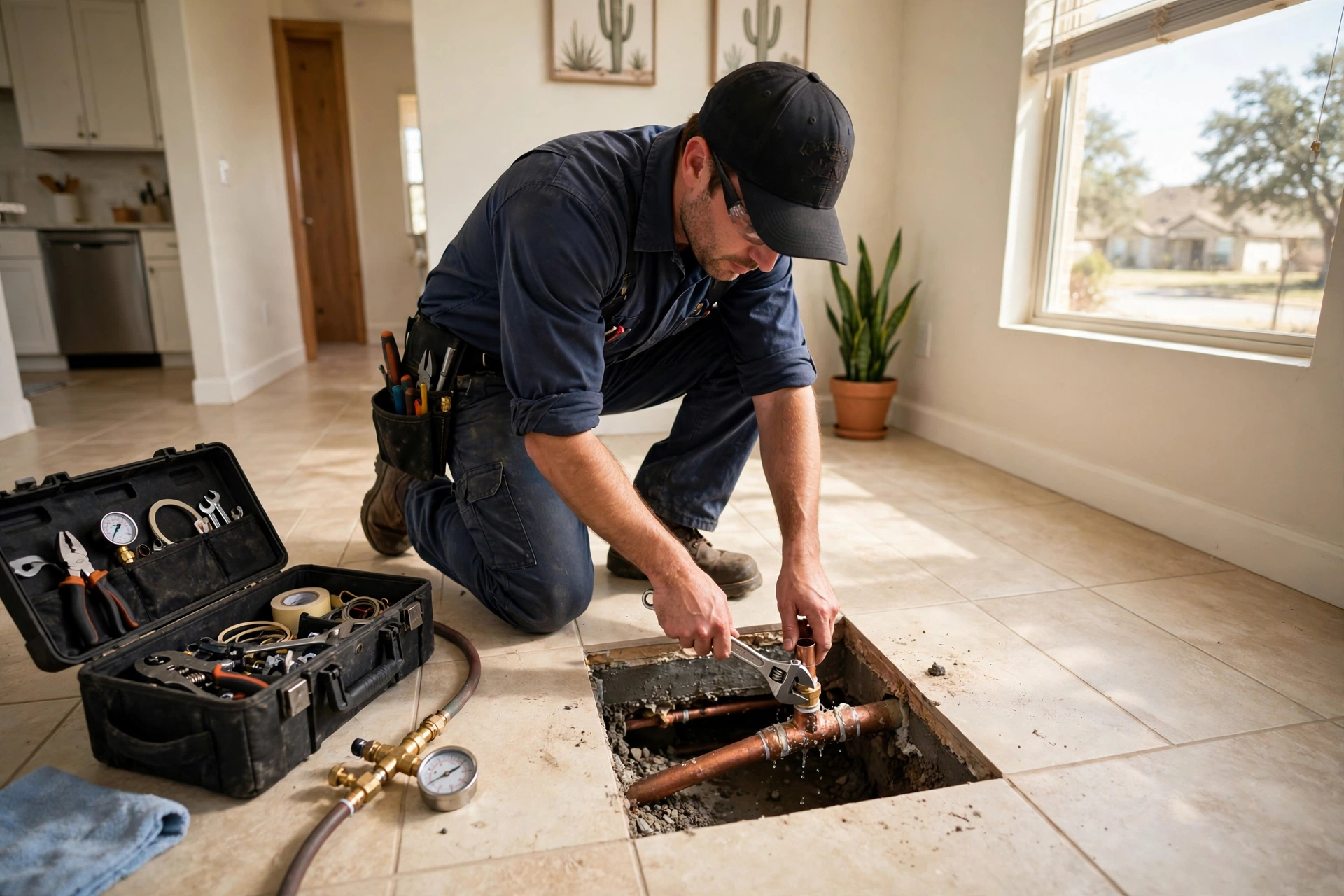
What to do when the signs add up
Do not wait for certainty; slab leaks do not improve in the waiting. Note when each sign started, photograph flooring changes, and keep the last few water bills — that timeline is genuinely useful to the professional and, later, possibly to an insurer.
Then get the leak confirmed and pinpointed. If it is under the slab, you will hear the method options with the evidence in front of you. If it is not, you will know that too — and sleep better for it.
The combination, not a single sign: an unexplained bill increase plus a meter that moves with everything off is the strongest early evidence a homeowner can gather without equipment.
For a while, yes — small leaks under the middle of a slab can run quietly until the bill or the floor speaks. It is one reason annual bill-watching matters in slab homes.
A warm spot over a hot-water line’s path is a strong sign, but radiant systems and sun-heated tile mimic it. The assessment confirms — do not let anyone quote a repair from the warm spot alone.
Related Services & Guides
Have This Problem at Your Home?
Guides explain the problem — an assessment shows whether it is yours. One call connects you with an independent local slab leak professional in the Little Elm area.
Call (888) 555-0199 →Get in Touch with Us
The fastest way to reach a local slab leak professional is by phone. Prefer to write it down first? Send the short form — describe what you are seeing (a sudden bill spike, warm floor spots, the sound of running water), where in the home, and since when.