Does Insurance Cover Slab Leak Repair in Texas?
The short answer every Texas homeowner deserves: sometimes, partially, and it depends on which part of the job you mean. Insurers split a slab leak into pieces — finding it, accessing the pipe, repairing the pipe, and the water damage it caused — and treat each piece differently. This guide explains the split and the documentation that decides claims.
The four pieces of a slab leak claim
Piece one: detection — confirming and pinpointing the leak. Piece two: access — opening the slab, tunneling, or otherwise reaching the pipe. Piece three: the pipe repair itself. Piece four: the resulting damage — floors, cabinets, drywall, mold remediation.
Many Texas homeowners policies cover pieces one, two and four when the leak is sudden and accidental — the ‘tear-out’ to reach a failed system and the damage it caused — while excluding piece three, the repair of the pipe itself, as wear and maintenance. Every policy words this differently; yours is the authority.
What ‘sudden and accidental’ means in practice
A pipe that splits or a fitting that fails is an event. A line that corroded over twenty years is a process. Adjusters live on this line, and the professional’s documentation — the failure’s location, its appearance, the pipe’s condition — is what places your leak on the covered side of it.
This is a practical reason to have the assessment documented before the repair erases the evidence: photographs of the failed section, moisture readings, and the written scope.
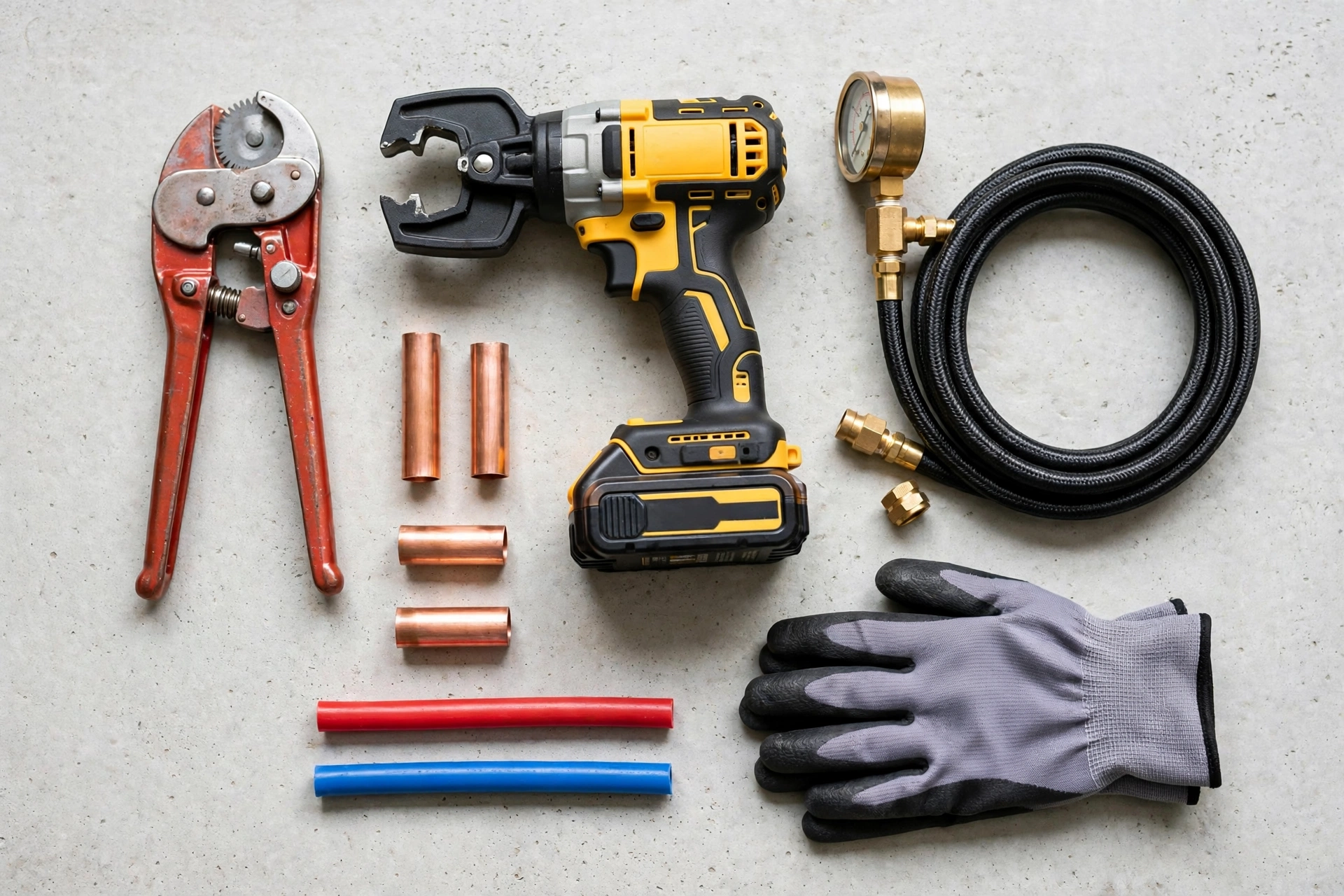
The documentation that makes or breaks it
Keep: the water bills before and after (usage is the timeline), meter photos, the professional’s written findings with the leak’s pinpointed location, photos of the failed pipe section, moisture and damage photos, and every invoice separated by the four pieces above.
Insurers reimburse pieces, not totals. A single lump-sum invoice invites a single lump-sum denial; an itemized record invites an itemized payment.
Access method can matter to the claim
Where a policy covers access, the access must usually be reasonable for the situation. Tunneling chosen because the leak sits under irreplaceable flooring is a reasoned choice — documented in the scope — while the same method chosen without cause invites questions. Your professional’s written reasoning is part of the claim file.
Ask the question before the work, not after: ‘Will you document why this method fits this leak?’ A professional who works insurance jobs answers easily.
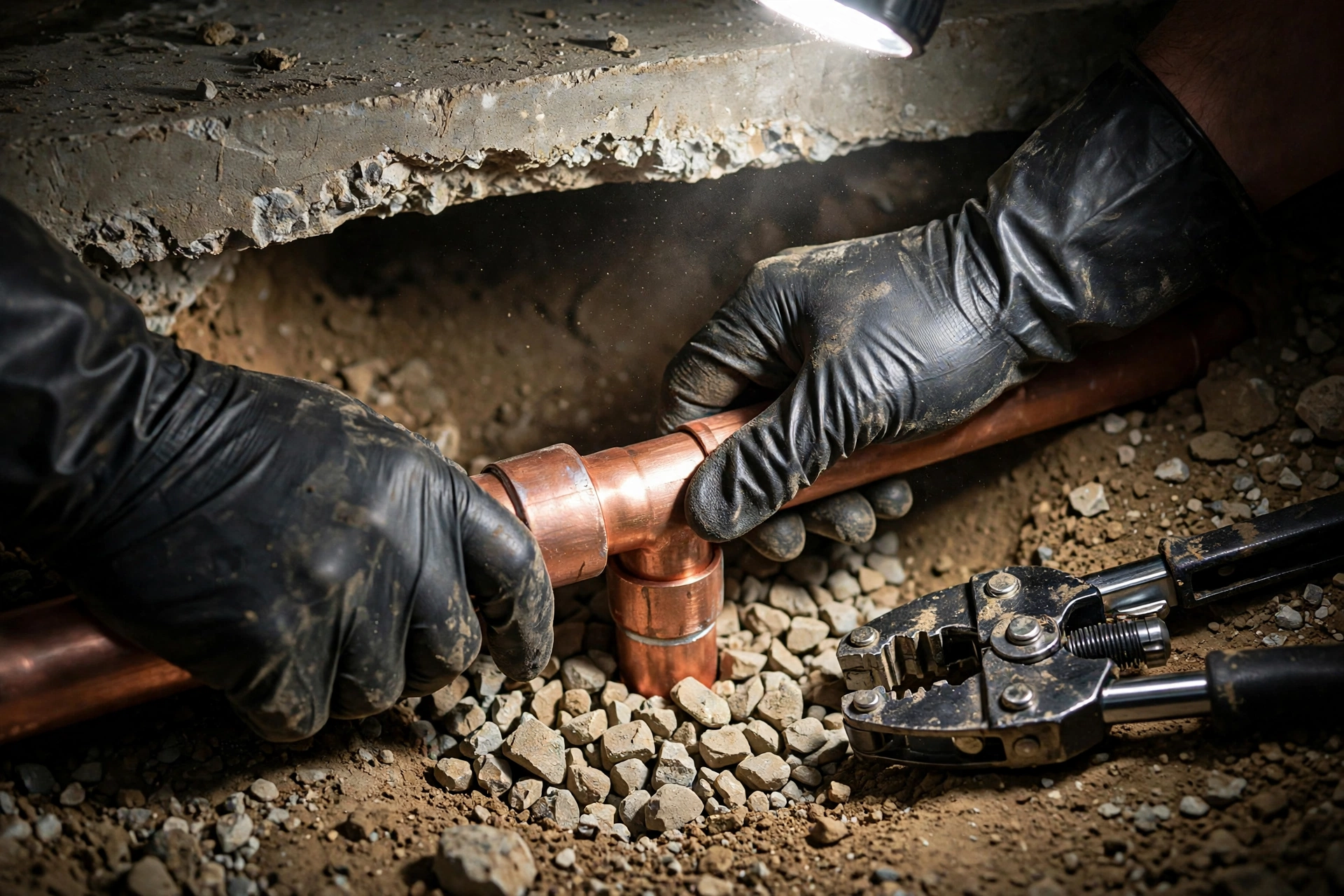
What to do first, in order
Stop the damage (shut-off if it is active), document everything, then notify the insurer — mitigation is typically a policy duty, and a running leak helped by no one is the weakest claim position. Then get the professional’s assessment in writing before authorizing the repair itself.
And read your own policy’s plumbing and water-damage language tonight, not during the claim. Knowing your four pieces in advance turns a slab leak from a financial ambush into a managed expense.
Often, when the leak is a covered failure — pinpointing is commonly treated as part of accessing the repair. Your policy’s wording governs; the invoice for it should be itemized separately.
It can — water claims are weighted heavily in Texas underwriting. Many homeowners weigh a small claim against that. The decision is yours; the documentation should exist either way.
Where the pipe repair itself is excluded, the rerouted line is usually treated as that same repair. Access and resulting-damage coverage may still apply to parts of the job — another reason for itemized invoices.
Related Services & Guides
Have This Problem at Your Home?
Guides explain the problem — an assessment shows whether it is yours. One call connects you with an independent local slab leak professional in the Little Elm area.
Call (888) 555-0199 →Get in Touch with Us
The fastest way to reach a local slab leak professional is by phone. Prefer to write it down first? Send the short form — describe what you are seeing (a sudden bill spike, warm floor spots, the sound of running water), where in the home, and since when.